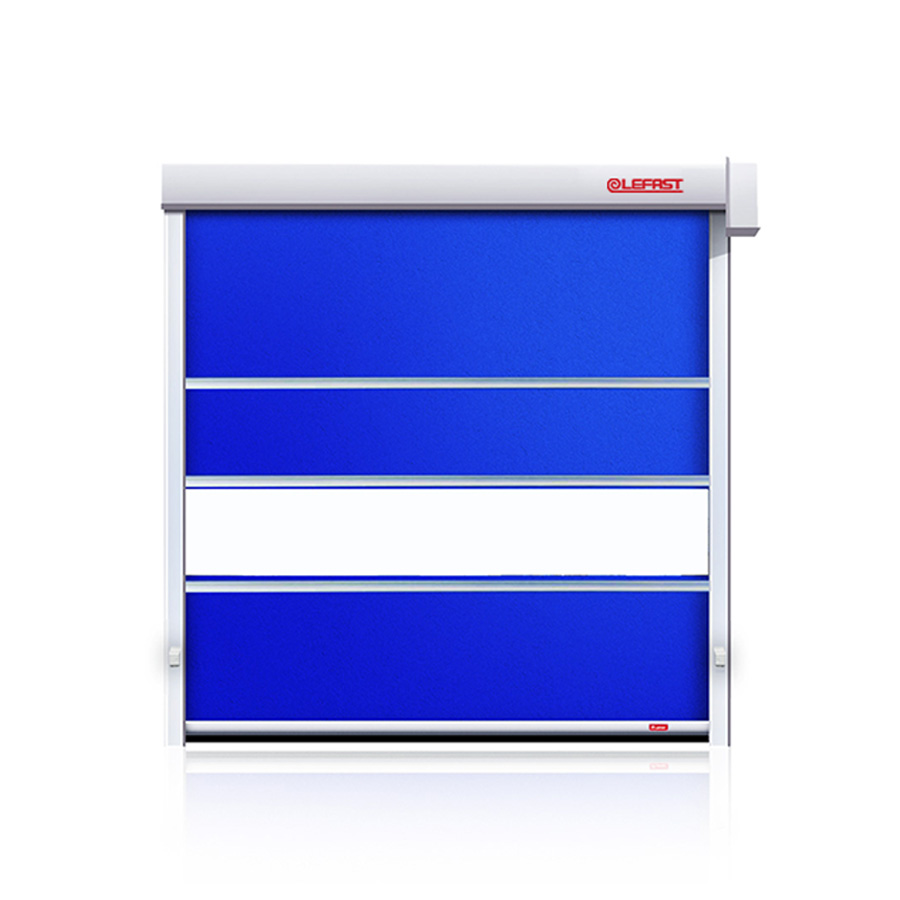
Running an industrial facility requires careful coordination between employees, machinery, transportation, and storage operations. Every part of the building must support the activities taking place inside it. Even something as simple as an entrance can influence how efficiently people and materials move throughout the workplace.
This is why many businesses are paying closer attention to modern industrial access solutions. high speed fabric doors offer an effective option for facilities that experience frequent movement and need reliable access throughout the day. Their flexible construction and automated operation make them suitable for a wide range of commercial and industrial applications.
Industrial entrances are exposed to demanding conditions. Unlike residential doors, they may be used continuously by forklifts, delivery vehicles, employees, and material-handling equipment.
A poorly selected entrance system can create unnecessary waiting times and interfere with normal business activities. In busy facilities, these interruptions may affect several connected processes, from receiving shipments to preparing products for delivery.
Modern access systems are designed to address these challenges. By providing faster opening and closing cycles, high-speed fabric doors help businesses maintain smoother movement between different operational areas.
Fabric-based industrial doors are designed around flexible curtain materials supported by a mechanical structure. An electric motor and control system manage the opening and closing process, while additional components provide operational stability and safety.
Different models are manufactured for different applications. Some are intended for internal passages with frequent pedestrian or forklift movement, while others are designed for external entrances exposed to changing weather conditions.
Depending on the intended use, available features may include reinforced fabric, transparent viewing sections, automatic activation, and protective safety mechanisms.
This flexibility allows businesses to select equipment that matches the physical layout and operational demands of their buildings.
An organized workplace depends on the smooth movement of people and equipment. In manufacturing facilities, materials often travel through several departments before reaching the finished-product stage.
If employees must repeatedly wait for access points to open, the entire process can become less efficient.
Fast-operating fabric doors can help reduce these interruptions. They allow vehicles and personnel to move between designated spaces more conveniently, supporting better coordination between departments.
In larger facilities, different door systems can also be installed according to the traffic requirements of individual areas. This makes it easier to establish a consistent movement pattern throughout the building.
Environmental management is an important consideration for businesses that operate specialized facilities. Temperature changes, humidity, and airborne particles can affect both working conditions and certain stored materials.
An entrance that remains open for extended periods may allow unwanted air exchange between indoor and outdoor spaces.